


A clogged filter is rarely the root cause of an engine derate; it is almost always the final symptom of an upstream mechanical failure. When your equipment enters limp mode, the immediate instinct is to send the filter for cleaning, yet many operators find themselves facing the same fault codes just weeks later. This DPF system troubleshooting guide provides the technical framework needed to break that cycle. With commercial downtime costing up to $1,500 per day in lost revenue, relying on guesswork or waiting for a dealer's schedule is no longer a viable business strategy.
You likely understand that maintaining emissions compliance is essential, especially with EPA civil penalties reaching over $45,268 per noncompliant vehicle. We'll show you how to move beyond basic code reading to perform professional-grade diagnostics that identify exactly why a system is failing. By following this systematic approach, you'll gain the autonomy to resolve issues in-house, reduce maintenance expenses, and ensure your fleet stays operational without constant reliance on expensive external service departments. We will examine sensor data, forced regeneration protocols, and the specific diagnostic steps required for heavy-duty machinery.
Key Takeaways
- Identify the root cause of failures by looking upstream at components like EGR coolers and fuel injectors instead of just treating the filter as the primary issue.
- Utilize this DPF system troubleshooting guide to interpret live soot load data and temperature sensor readings for more accurate field diagnostics.
- Gain autonomy from dealer service departments by mastering forced regenerations and system resets using professional diagnostic tools.
- Overcome "Regen Inhibited" fault codes by systematically checking the specific ECU parameters that block high-temperature cleaning cycles.
- Transition to proactive maintenance by aligning service intervals with engine hours and using low-SAPS oils to minimize particulate accumulation.
Understanding the Diesel Particulate Filter (DPF) System in 2026
The Diesel Particulate Filter (DPF) is a ceramic wall-flow component designed to capture 90% or more of particulate matter, commonly known as soot, from diesel exhaust. It does not operate in isolation. Instead, it functions as a critical stage within the broader Aftertreatment System (ATS). To understand its role, you must view it alongside the Diesel Oxidation Catalyst (DOC), which sits upstream to oxidize carbon monoxide, and the Selective Catalytic Reduction (SCR) system, which follows the DPF to reduce nitrogen oxides. This integrated chain ensures that heavy-duty equipment meets modern environmental requirements.
As we move through 2026, the regulatory environment has become significantly more stringent. Programs like the "Clean Truck Check" and similar state-level inspections mean that even minor emissions faults can lead to heavy fines or forced removal from service. A functional DPF is no longer just a recommendation; it's a legal and operational necessity. When the system detects an issue, it typically triggers a series of warnings. These begin with frequent regeneration requests and eventually escalate to engine derate or the dreaded "limp mode," where the ECU restricts engine power to prevent further damage or excessive emissions.
Effective diagnostics require a shift in perspective. You shouldn't view the filter as a standalone part that simply breaks. This DPF system troubleshooting guide focuses on the reality that the filter is a data point. If it clogs prematurely, the engine is likely producing too much soot or failing to reach the temperatures required for self-cleaning. Identifying these underlying issues is the only way to ensure long-term equipment uptime.
How the DPF Works: Passive vs. Active Regeneration
Passive regeneration occurs naturally during high-load operations when exhaust temperatures reach between 250°C and 400°C. At these levels, soot oxidizes without any intervention from the ECU. However, if the duty cycle involves frequent idling or low-speed operation, the system must trigger an active regeneration. During this cycle, the ECU commands fuel injection into the exhaust stream, often via a dedicated "seventh injector" or post-injection in the cylinders. This raises the filter temperature to over 600°C to incinerate the accumulated soot. Understanding which cycle your equipment relies on is the first step in diagnosing why a filter is filling too quickly.
Soot vs. Ash: The Critical Difference for Technicians
Technicians must distinguish between soot and ash to avoid wasted labor. Soot is carbon-based and combustible; it disappears during a successful regeneration. Ash, however, is the non-combustible byproduct of engine oil and fuel additives. Over thousands of hours, ash builds up and occupies physical space inside the ceramic channels. A forced regeneration will never remove ash. If your diagnostics show high backpressure even after a successful regen, the filter likely requires professional thermal cleaning or reached its end-of-life. Using high-quality, low-SAPS engine oils is the primary way to slow this ash accumulation and extend the service life of the component.
Systematic DPF Troubleshooting: Identifying the Root Cause
The golden rule of emissions maintenance is simple: never replace or clean a filter without identifying exactly why it failed. A DPF is a reactive component. If it clogs prematurely, it's responding to an engine condition that hasn't been corrected. Treating the filter as the primary problem is a costly mistake that often leads to recurring downtime and secondary cleanings within a few hundred hours. This DPF system troubleshooting guide emphasizes that the filter is the victim of its environment, not the perpetrator of the fault.
Upstream engine faults are the most common culprits. A leaking EGR cooler can introduce coolant into the exhaust stream, which mixes with soot to create a thick, "face-plugged" layer that no regeneration cycle can clear. Similarly, a stuck or "dripping" fuel injector prevents proper atomization. This results in excessive smoke and localized hot spots that can actually melt the ceramic substrate. Turbocharger health is equally vital; internal oil seal leaks introduce engine oil directly into the filter, causing rapid ash buildup that is impossible to remove through standard active regeneration. Utilizing a professional Jaltest CV Kit allows technicians to run cylinder cut-out tests and monitor EGR positions to catch these issues early.
The Upstream Checklist: Where Clogs Actually Begin
Technicians should start by inspecting the EGR system for carbon buildup or valve failure. A valve that fails to close properly will cause a rich fuel-to-air ratio, leading to massive soot production. Testing fuel injectors for poor atomization is the next step, as "wet" exhaust will saturate the filter substrate rapidly. Finally, check for air intake leaks; even a small crack in a charge air cooler hose can prevent the engine from receiving enough oxygen for complete combustion, resulting in the heavy particulates that overwhelm the ATS.
Validating Sensor Data: Manometer vs. Software
Differential pressure is the measurement of exhaust resistance across the filter substrate. While your diagnostic software reports this value, you shouldn't trust the sensor blindly. Common failure modes include melted pressure tubes, moisture freezing in the lines, or internal electrical shorts that send false "filter full" signals to the ECU. Using a physical manometer to verify the actual backpressure against the sensor's voltage readings is the only way to confirm if you're dealing with a physical clog or a simple electronic failure. This verification prevents the unnecessary expense of removing a perfectly functional filter based on faulty data.
Advanced DPF Diagnostics with Jaltest Software
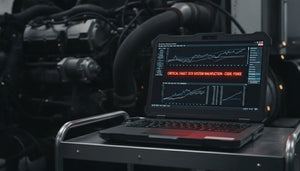
Accessing dealer-level diagnostics is the most effective way to reduce dependency on external service centers. While generic scanners might read basic codes, the Jaltest CV Kit offers deep integration with the aftertreatment control module. This level of access allows you to monitor live soot load percentages and exhaust gas temperatures at multiple stages of the ATS. By watching these sensors in real-time, you can verify if the system is reaching the 600°C required for a successful active regeneration. If the temperature stalls at 400°C, you've identified a thermal management issue rather than a physical filter clog.
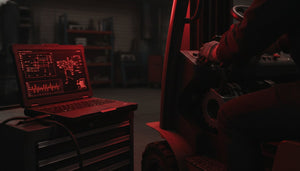
This DPF system troubleshooting guide highlights that software is more than a code reader. It is a tool for bi-directional testing. You can command Variable Geometry Turbo (VGT) calibrations or perform specific EGR functional tests directly from your ruggedized laptop. These actions help you confirm if the mechanical components are responding correctly to ECU commands. The software also provides integrated technical data, including wiring diagrams and component locations. This ensures you aren't searching blindly for a specific pressure sensor or temperature probe in a crowded engine bay.
Navigating the Aftertreatment Module
Connecting to the system begins with selecting the specific vehicle or engine manufacturer within the Jaltest interface. Once the ECU is identified, you can access the emissions sub-system to pull active and inactive fault codes. Codes like P242F indicate excessive ash accumulation, while P2002 suggests the filter's efficiency is below the required threshold. Understanding these distinctions is vital for a correct repair path. Using the 'Expert Mode' allows technicians to perform advanced resets, such as the DPF replacement command. This reset is mandatory after cleaning or replacing a filter to clear the ECU's learned soot and ash values.
Cross-System Diagnostics: AGV, OHW, and Marine
The complexity of emissions systems isn't limited to on-highway trucks. For those managing agricultural fleets, the Jaltest AGV Kit provides the same diagnostic depth for equipment like John Deere tractors or Case IH combines. In the off-highway sector (OHW), heavy earthmovers often face extreme soot loading due to high idle times. Even in the maritime industry, the Jaltest Marine Kit supports DPF troubleshooting for engines operating in confined engine rooms. A professional vehicle diagnostic tool must be versatile. An all-makes approach ensures that regardless of the machine type, your team has a consistent process for identifying and resolving aftertreatment failures.

Executing a Forced DPF Regeneration and System Reset
A forced regeneration is the final diagnostic step after you have addressed the upstream mechanical issues identified earlier in this DPF system troubleshooting guide. Unlike passive or active driving cycles, a forced regen is a stationary procedure commanded by diagnostic software. It is a high-temperature event where exhaust temperatures can exceed 600°C. Because of this heat, safety protocols are non-negotiable. You must ensure the vehicle is parked on a non-flammable surface, such as concrete, with at least five feet of clearance around the exhaust outlet. Personnel should remain clear of the tailpipe to avoid severe burns or respiratory irritation from the concentrated off-gassing.
One of the most common frustrations for technicians is the "Regen Inhibited" status. When the ECU blocks a command, it is usually protecting the engine from a secondary failure. The controller often requires specific parameters to be met: the parking brake must be set, the transmission must be in neutral, and the clutch pedal must remain untouched. If these conditions are met and the regen still won't initiate, check your coolant and oil temperatures. Most systems require a minimum of 150°F (65°C) before they allow the high-idle thermal cycle to begin. Troubleshooting these inhibitors is often a matter of verifying simple switch positions rather than complex electronic failures.
Step-by-Step: Performing a Forced Regeneration
Once you initiate the command through your software, the engine will typically ramp up to a high idle. During this time, you should monitor the "Regen Stages" and temperature sensors in real-time. A healthy system will show a steady temperature rise at the DOC inlet, followed by a corresponding rise at the DPF. If the DOC inlet temperature is high but the DPF remains cool, the catalyst may be "poisoned" or face-plugged with soot. Completing this in-house saves the $150 to $400 fee typically charged by repair shops for a single forced regeneration event. To manage these cycles effectively across your fleet, consider investing in a Jaltest CV Kit to gain full control over your emissions maintenance.
When the Reset Fails: Troubleshooting the Controller
Replacing or thermally cleaning a filter is only half the job. You must also perform an "Ash Level Reset" or "DPF Replacement" command in the ECU. This tells the controller that the physical restriction has been removed. If the ash level won't zero out, you may be dealing with "Ghost Codes" or inactive faults that were not properly cleared before the routine. It's also vital to ensure your software licenses are current. As of the March 10, 2026, release of Jaltest version 26.1, many new ECU firmware protocols require updated handshake sequences to successfully execute a system reset. Without the latest software, the controller may reject the reset command, leaving the vehicle in a persistent derate state despite having a clean filter.
Proactive Maintenance: Preventing Future DPF Failures
A reactive approach to aftertreatment maintenance is a recipe for operational instability. While this DPF system troubleshooting guide provides the steps to resolve active faults, the ultimate goal for any fleet manager or independent shop is to prevent these issues from surfacing in the first place. For heavy-duty equipment, traditional mileage-based maintenance schedules are often insufficient. Instead, you should develop a preventative maintenance (PM) program based on engine hours and total fuel burn. These metrics provide a much more accurate reflection of the soot and ash loading occurring within the ceramic substrate, especially for machines that spend significant time idling or operating under high-load cycles.
The choice of engine oil is another critical factor in long-term DPF health. Using high-quality, low-SAPS (Sulfated Ash, Phosphorus, and Sulfur) oils is essential. These lubricants are formulated to minimize the production of non-combustible ash. As established earlier, ash cannot be removed through active regeneration and eventually requires expensive thermal cleaning. By strictly adhering to CK-4 or FA-4 oil standards, you directly extend the service interval of your filter and reduce the risk of premature backpressure faults. This proactive stance transforms emissions management from an unpredictable expense into a controlled, predictable part of your operational budget.
Training and Technical Support
Modern emissions systems are complex, and the technology continues to evolve. Enrolling your team in Jaltest University for specialized emissions courses ensures they can handle the nuances of 2026 aftertreatment modules. If a technician encounters a particularly stubborn SCR or DPF fault, Mechnician's Jaltest technical support can provide a second pair of eyes through remote diagnostic sessions. This level of partnership allows you to tackle complex repairs without sending the machine back to the dealer. Continuous technician education is the most effective way to reduce long-term emissions repair costs.
Acquiring the Right Technology
Field-based troubleshooting requires hardware that can withstand the rigors of an industrial environment. Ruggedized Diagnostic Laptops are essential for maintaining a stable connection to the ECU while working in the dirt or rain. For independent shops looking to expand their capabilities, flexible financing options are available to help you acquire a Jaltest OHW or MHE kit without a massive upfront capital expenditure. Having the right tools on hand ensures that your DPF system troubleshooting guide is backed by the physical capacity to execute professional repairs. Empower your shop with the Jaltest Diagnostic Ecosystem today.
Securing Long-Term Uptime Through Professional Diagnostics
Mastering emissions diagnostics is a fundamental requirement for maintaining equipment profitability in 2026. This DPF system troubleshooting guide has demonstrated that a clogged filter is almost always a secondary symptom of an upstream engine fault. By identifying root causes like EGR leaks or injector failures early, you can avoid the high costs of recurring cleanings and unnecessary component replacements. Success in the field depends on moving beyond simple code clearing and adopting a systematic approach to thermal management and sensor validation.
Transitioning to an in-house diagnostic model offers more than just reduced dealer bills; it provides your organization with operational autonomy. As an Authorized Jaltest Dealer, we support your team with expert remote technical support and comprehensive Jaltest University training to ensure every repair is accurate and efficient. Take Control of Your Emissions Repairs with Jaltest Diagnostics and ensure your fleet remains compliant and productive. You now have the technical framework to resolve complex faults. It's time to implement these professional standards in your shop and eliminate unnecessary downtime.
Frequently Asked Questions
Can I drive my truck with the DPF light on?
You should not continue normal operation for an extended period once the DPF light illuminates. A solid light indicates that the filter is reaching its soot capacity and requires an active or forced regeneration cycle soon. Ignoring this warning will eventually lead the ECU to trigger an engine derate or limp mode to prevent permanent damage to the ceramic substrate or the broader aftertreatment system.
How much does a forced DPF regeneration cost if I do it myself?
Performing a forced regeneration yourself eliminates the service fees typically charged by repair shops, which range from $150 to $400 per event in 2026. While there is an initial investment in a diagnostic kit, the cost per regeneration becomes negligible over time. Doing it yourself also saves the $500 to $1,500 in daily lost revenue often associated with vehicle downtime at a dealer.
Why does my DPF keep clogging even after a professional cleaning?
Recurring clogs usually indicate that the root cause of the failure is located upstream in the engine. If a leaking EGR cooler, stuck fuel injector, or turbocharger oil leak is not repaired, the cleaned filter will simply "face-plug" again within a few hundred hours. A professional DPF system troubleshooting guide emphasizes that the filter is a reactive component; it only clogs when the engine produces excessive particulates.
Is it possible to troubleshoot a DPF system without a high-end diagnostic tool?
While you can perform basic visual inspections or use a physical manometer to check backpressure, comprehensive troubleshooting requires a tool with bi-directional capabilities. You need to monitor live soot load percentages and exhaust temperatures at various stages of the ATS. Without this data, you cannot verify if the system is reaching the 600°C threshold required for a successful regeneration or if a sensor is providing false data.
What is the difference between a DPF reset and an ash level reset?
A DPF reset generally clears temporary soot accumulation values, whereas an ash level reset is a specific command used only after a filter is replaced or thermally cleaned. Ash is a non-combustible byproduct that doesn't burn off during regeneration. If you don't reset the ash counter after service, the ECU will continue to calculate exhaust restriction based on the old, high-ash data, leading to premature fault codes.
Can a faulty EGR valve cause DPF fault codes?
Yes, a faulty EGR valve is one of the most common causes of DPF-related fault codes. If the valve fails to close or operate correctly, it creates a rich fuel-to-air ratio that produces massive amounts of soot. This excessive particulate matter overwhelms the filter's capacity for passive regeneration, resulting in frequent active regeneration requests and eventual "efficiency below threshold" or "filter full" warnings.
How often should a DPF be removed for professional thermal cleaning?
Most manufacturers recommend professional thermal cleaning every 2,000 to 5,000 hours for off-highway equipment or every 150,000 to 250,000 miles for on-highway trucks. These intervals can vary based on your specific duty cycle. High idle times or the use of incorrect engine oils will accelerate ash accumulation, requiring more frequent removal to maintain the physical integrity of the filter and ensure optimal fuel efficiency.
What are the 2026 requirements for the Clean Truck Check emissions test?
The 2026 Clean Truck Check focuses on verifying that the on-board diagnostic system is fully functional and that no active emissions-related fault codes are present. This DPF system troubleshooting guide helps you remain compliant by identifying issues before they trigger a failure. Remember that the EPA retains the authority to impose civil penalties of up to $45,268 per noncompliant vehicle for emissions tampering or reporting violations.



Leave a comment