


What if the flashing light on your dashboard didn't have to mean an immediate $180 per hour service bill plus travel fees? When a machine stops mid-shift, the pressure to restore operations often leads to frustration, especially when free online lists for doosan forklift fault codes prove incomplete or outdated. We understand that every minute of downtime directly impacts your warehouse efficiency and bottom line. Relying on guesswork isn't just inefficient; it's a risk to your operational stability.
This guide provides the technical clarity needed to master these diagnostics, moving beyond simple identification toward professional-grade resolution. You'll learn how to execute the manual "pedal dance" for immediate field checks and how to leverage the Jaltest MHE diagnostic system for deeper system analysis. We'll walk through the specific processes for identifying errors, performing necessary calibrations, and utilizing the latest 2026 software updates to ensure your fleet remains safe and compliant with current industrial standards. Our goal is to provide you with a logical, engineer-led approach to maintenance that turns technical hurdles into manageable tasks.
Key Takeaways
- Understand the Small Engine Control Module (SECM) architecture to distinguish between active system errors and stored historical codes.
- Master the specific timing requirements of the manual "pedal dance" method to retrieve diagnostic information directly from the machine interface.
- Identify common doosan forklift fault codes related to fuel systems and hydraulics to move from simple identification to effective mechanical repair.
- Learn why parameter resets and calibrations are essential after replacing components to prevent the recurrence of cleared faults.
- See how the Jaltest MHE Kit provides the bi-directional testing and wiring diagrams necessary for professional-grade fleet maintenance.
Understanding Doosan Forklift Fault Codes and System Architecture
Understanding the underlying architecture is the first step in accurately interpreting doosan forklift fault codes and restoring machine uptime. Modern Doosan units aren't just mechanical assemblies; they're sophisticated networks of electronic control units that communicate in real time. The SECM acts as the primary microprocessor in Doosan LPG systems to monitor engine parameters, manage fuel delivery, and log electronic faults. This module serves as the brain of the engine, constantly comparing sensor data against pre-set operational thresholds.
When a sensor detects a value outside these limits, the system generates a code. It's vital to distinguish between active faults and stored history codes. Active faults indicate a current sensor failure or out-of-range value that requires immediate attention. Stored history codes provide a snapshot of intermittent issues that occurred during previous operating hours. These historical logs are invaluable for identifying "ghost" problems that don't appear during a stationary inspection but happen under specific load conditions.
Communication between the engine, mast, and transmission is handled via CAN bus protocols. This digital "handshake" allows different parts of the forklift to work in unison. If the mast controller detects a hydraulic pressure spike, it communicates this to the engine to adjust RPMs. A common frustration occurs when the Malfunction Indicator Lamp (MIL) remains illuminated after a physical repair. This happens because the system often requires a specific number of "clean" start cycles or a digital reset to confirm that the fault is permanently resolved.
Flash Codes vs. DTCs (Diagnostic Trouble Codes)
Flash codes are retrieved by observing the rhythmic blinking of the MIL, which serves as a basic diagnostic tool for operators without specialized equipment. In contrast, Diagnostic Trouble Codes (DTCs) are alphanumeric strings that offer high-resolution data regarding the specific circuit or component at fault. As we move through 2026, the complexity of emissions standards means that digital DTCs have become the standard for accurate troubleshooting, as they provide much more granular detail than a blinking light can offer.
The Role of the VCU in Material Handling
The Vehicle Control Unit (VCU) serves as the central intelligence for the forklift, balancing power demands between the drivetrain and the hydraulic systems. It categorizes doosan forklift fault codes by severity, ranging from minor maintenance reminders to critical "Stop Engine" commands. If the VCU detects a loss of oil pressure or excessive coolant temperature, it will initiate a controlled shutdown or a "limp mode" to prevent catastrophic mechanical failure. Understanding these priority levels helps technicians decide whether a machine can finish a shift or must be tagged out immediately.
How to Read Doosan Fault Codes: The Manual 'Pedal Dance'
Field diagnostics often begin with the "pedal dance," a specific manual sequence used to extract doosan forklift fault codes without an external scanner. This method is a practical first step for on-site triage, allowing technicians to identify the general area of failure before committing to deeper teardowns. It relies on the Malfunction Indicator Lamp (MIL) to communicate system status through a series of timed light pulses. While basic, this technique requires precise execution and a clear understanding of the signaling rhythm to avoid misdiagnosis.
Timing is the most critical factor in this process. The SECM (Small Engine Control Module) only enters diagnostic mode if the sequence is completed within a strict 5-second window. If the timing is off by even a fraction of a second, the system will remain in its standard operating mode, and no codes will be displayed. This manual method is helpful for identifying clear component failures, but it lacks the depth of modern digital diagnostics. It won't show you real-time sensor voltages or the specific millisecond timing of fuel injectors, which is why many fleet managers eventually transition to a professional vehicle diagnostic tool for comprehensive maintenance.
The Manual Retrieval Sequence
To begin, ensure the ignition is in the OFF position and the forklift is on a level surface with the parking brake engaged. Turn the key to the ON position, but do not crank the engine. Within five seconds, fully depress and release the accelerator pedal three times. If successful, the MIL will begin to blink. You must count the pulses carefully. Long pulses (lasting approximately one second) represent the tens digit, while short pulses (lasting half a second) represent the units digit. For example, two long flashes followed by three short flashes indicate code 23. The system will pause between different codes, allowing you to record the entire fault history.
Common Errors During Manual Diagnostics
The most frequent reason for a failed "pedal dance" is attempting the sequence while the engine is already running. The SECM will only trigger the flash sequence from a "Key ON, Engine OFF" state. Additionally, if the accelerator pedal position sensor is faulty or out of calibration, the module may not register the three required pumps. This creates a circular problem where you cannot read the code because the component required to trigger the reading is the one that has failed. If the manual sequence fails repeatedly despite correct timing, it's a clear indicator that the issue has moved beyond basic troubleshooting. In these instances, visiting mechnician.com to explore dedicated diagnostic hardware can save hours of fruitless manual attempts.
Common Doosan Forklift Fault Codes List & Meanings
Identifying the specific meaning of doosan forklift fault codes is essential for moving from diagnosis to repair. While the manual "pedal dance" provides the numerical sequence, the interpretation requires an understanding of the specific system flagging the error. These codes act as a roadmap for technicians, narrowing down whether a problem is a simple sensor failure or a deeper mechanical issue within the drivetrain or hydraulic circuits. Accurate interpretation prevents the unnecessary replacement of functional parts, focusing your maintenance efforts where they are truly needed.
LPG and Diesel Engine Faults
Internal combustion engines rely on the SECM to monitor air, fuel, and spark. When these parameters deviate, the system logs specific errors to prevent engine damage. Common codes include:
- Code 12: System Pass. This indicates that the SECM has completed its self-check and found no active faults in the engine management system.
- Code 14 and 15: ECT sensor issues. These codes flag high or low voltage at the Engine Coolant Temperature sensor, which can lead to overheating or poor fuel economy if the engine stays in an open-loop cooling cycle.
- Code 33: High fuel pressure. This often points to a malfunction in the injector circuit or a regulator failure, which is a frequent occurrence in high-hour LPG units.
Fault Code 91 indicates a signal failure in the Accelerator Pedal Position sensor, which often prevents the engine from exceeding idle speeds to ensure operator safety.
Hydraulic and Transmission Faults
Transmission-related errors often trigger a "limp home" mode, a protective state where the VCU restricts travel speed to prevent further damage to the clutch packs or torque converter. In the hydraulic system, doosan forklift fault codes typically highlight solenoid failures or pressure sensor discrepancies in the valve bank. If the VCU detects that a solenoid is drawing current outside of the 2026 safety specifications, it will disable that specific hydraulic function to protect the electronic control unit and the wiring harness from a short circuit.
Electric Doosan Models
Electric units utilize motor controller codes that differ significantly from internal combustion models. These faults often involve battery voltage drops, inverter over-temperature warnings, or motor phase failures. Monitoring these is critical for maintaining the longevity of the lithium-ion or lead-acid battery packs. A controller fault often indicates a communication break on the CAN bus, which requires a digital reset to restore full lifting capacity.
Advanced Emission & Aftertreatment Codes
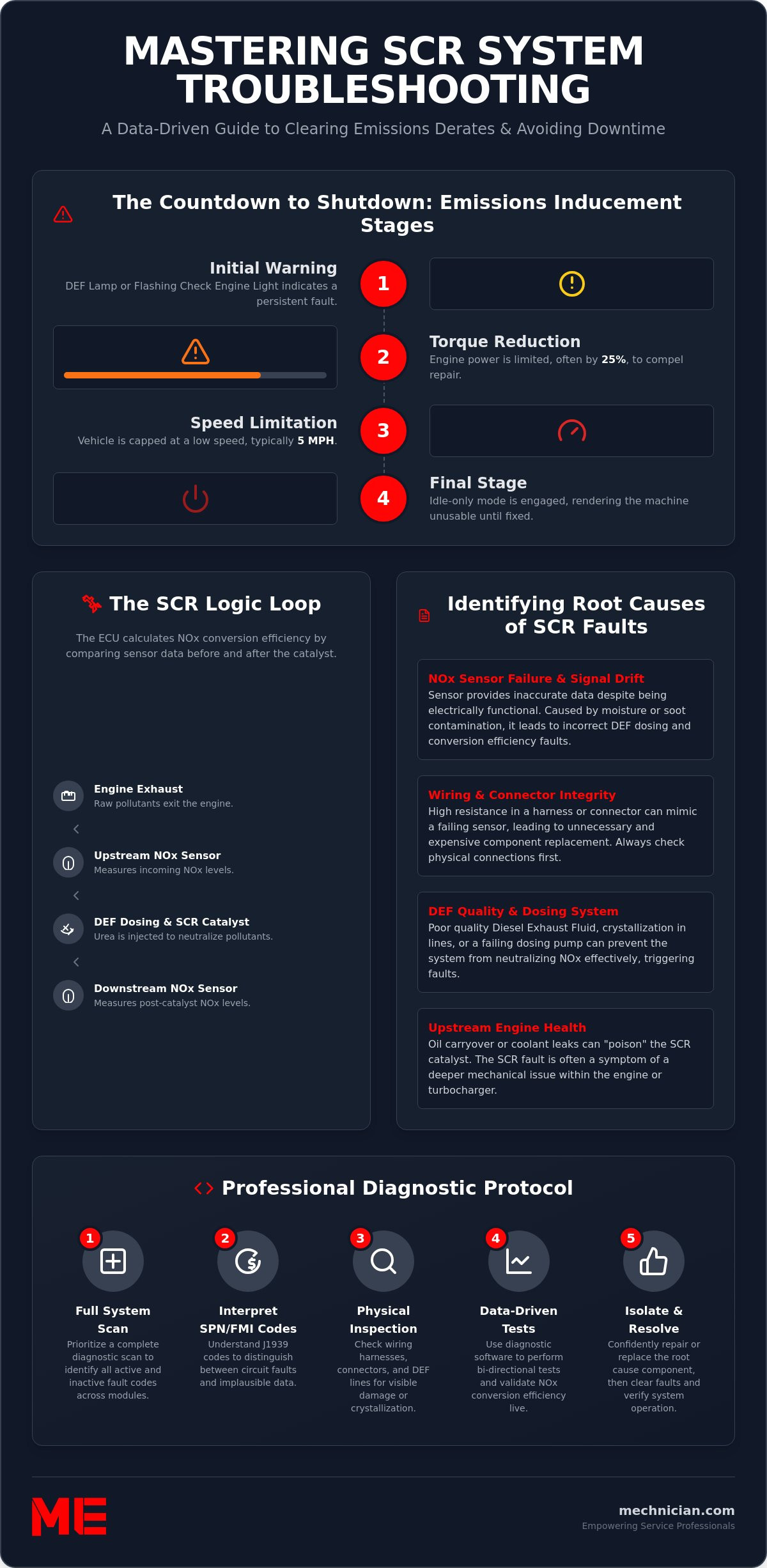
Modern Tier 4 and Tier 5 engines require strict monitoring of exhaust systems. DPF (Diesel Particulate Filter) codes alert the operator to soot accumulation that requires a parked regeneration cycle. Similarly, SCR (Selective Catalytic Reduction) and DEF (Diesel Exhaust Fluid) quality codes monitor the exhaust treatment process. If the DEF quality falls below the required threshold, the system will initiate a staged de-rate, eventually limiting the forklift to a crawl until the fluid is replaced and the system is reset using professional software.

Beyond the List: Advanced Troubleshooting and Calibrations
Simply identifying doosan forklift fault codes is only the first half of a successful repair. Many technicians make the mistake of clearing a code and assuming the job is finished, only to have the Malfunction Indicator Lamp (MIL) return during the next duty cycle. In modern material handling equipment, a fault code is a symptom of a systemic imbalance. If you replace a mass airflow sensor or a fuel injector without performing a parameter reset, the ECU continues to apply the old compensation values to the new hardware. This misalignment leads to poor fuel efficiency, rough idling, and eventually, the return of the same error code.
Diesel models from 2026 require even more specific intervention, particularly regarding the exhaust aftertreatment system. When the DPF (Diesel Particulate Filter) reaches a critical soot load, the machine may refuse to initiate a standard passive regeneration. In these cases, a "Forced DPF Regeneration" is necessary to clear the filter and reset the counter. This process requires a bi-directional diagnostic tool to command the engine to increase exhaust temperatures while the vehicle is stationary. Without this capability, the forklift will remain in a permanent de-rate mode, effectively halting your operations.
The Calibration Gap
Manual methods like the "pedal dance" provide no way to recalibrate a new throttle body or adjust hydraulic pressure relief settings. This is where the calibration gap occurs. To bridge this, many professionals apply the logic found in the Jaltest CV Kit to heavy-duty forklift systems, ensuring that every replaced component is digitally synchronized with the Vehicle Control Unit. Ignoring this step often results in "ghost codes," which are recurring errors that don't point to a failed part but rather to a wiring harness integrity issue or a calibration mismatch.
Using Specialized Diagnostic Cables
Accessing the deeper layers of the ECU requires more than just generic hardware. Doosan units typically utilize either 6-pin or 9-pin Deutsch connectors, depending on the engine manufacturer and the year of production. Using high-quality, specialized diagnostic cables is vital to prevent data corruption during the ECU flashing or calibration process. A loose connection or a poorly shielded cable can interrupt a parameter reset, potentially bricking the control module and leading to expensive hardware replacements. Mechnician focuses on providing these precision-engineered connections to ensure that your diagnostic sessions are stable and reliable. If you want to eliminate the guesswork and gain full control over your fleet's maintenance, explore the professional kits available at mechnician.com to secure the right tools for your specific model.
Optimizing Fleet Maintenance with Jaltest MHE Diagnostics
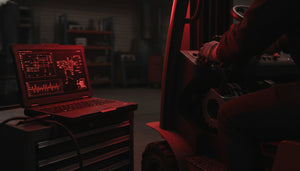
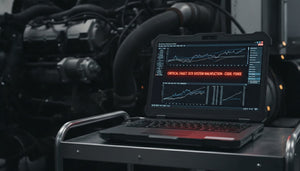
Transitioning from the manual pedal dance to a digital platform represents a shift from reactive troubleshooting to proactive fleet management. The Jaltest MHE (Material Handling Equipment) Kit provides a comprehensive solution for interpreting doosan forklift fault codes with surgical precision. Unlike manual methods that only offer a numerical sequence, this diagnostic system provides a deep look into the engine control module, allowing technicians to view live data streams and sensor voltages in real time. This level of detail is necessary to confirm whether a fault is a simple sensor failure or a more complex electronic communication issue within the CAN bus network.
The system's bi-directional testing capability allows you to command the forklift's components directly from the laptop. You can activate solenoids, test hydraulic valves, or run injector cut-out tests to isolate mechanical failures without unnecessary disassembly. Coupled with integrated wiring diagrams and component location guides, the Jaltest MHE Kit transforms the diagnostic process into a logical, step-by-step workflow. This engineering-led approach ensures that repairs are performed correctly the first time, minimizing the risk of recurring downtime and operational halts.
The Jaltest Advantage for Forklift Fleets
Warehouse environments often house a mix of equipment brands. The Jaltest MHE Kit offers multi-brand coverage, allowing your team to diagnose Doosan, Hyster, Yale, and Toyota units with a single interface. This eliminates the need for multiple proprietary tools and simplifies the training process for your maintenance staff. To withstand the rigors of a warehouse, Mechnician provides Ruggedized Diagnostic Laptops built to handle dust, vibrations, and accidental drops. These units are far more reliable than consumer-grade tablets, ensuring your diagnostic tools remain functional in the harshest industrial conditions.
Investment and ROI for Independent Shops
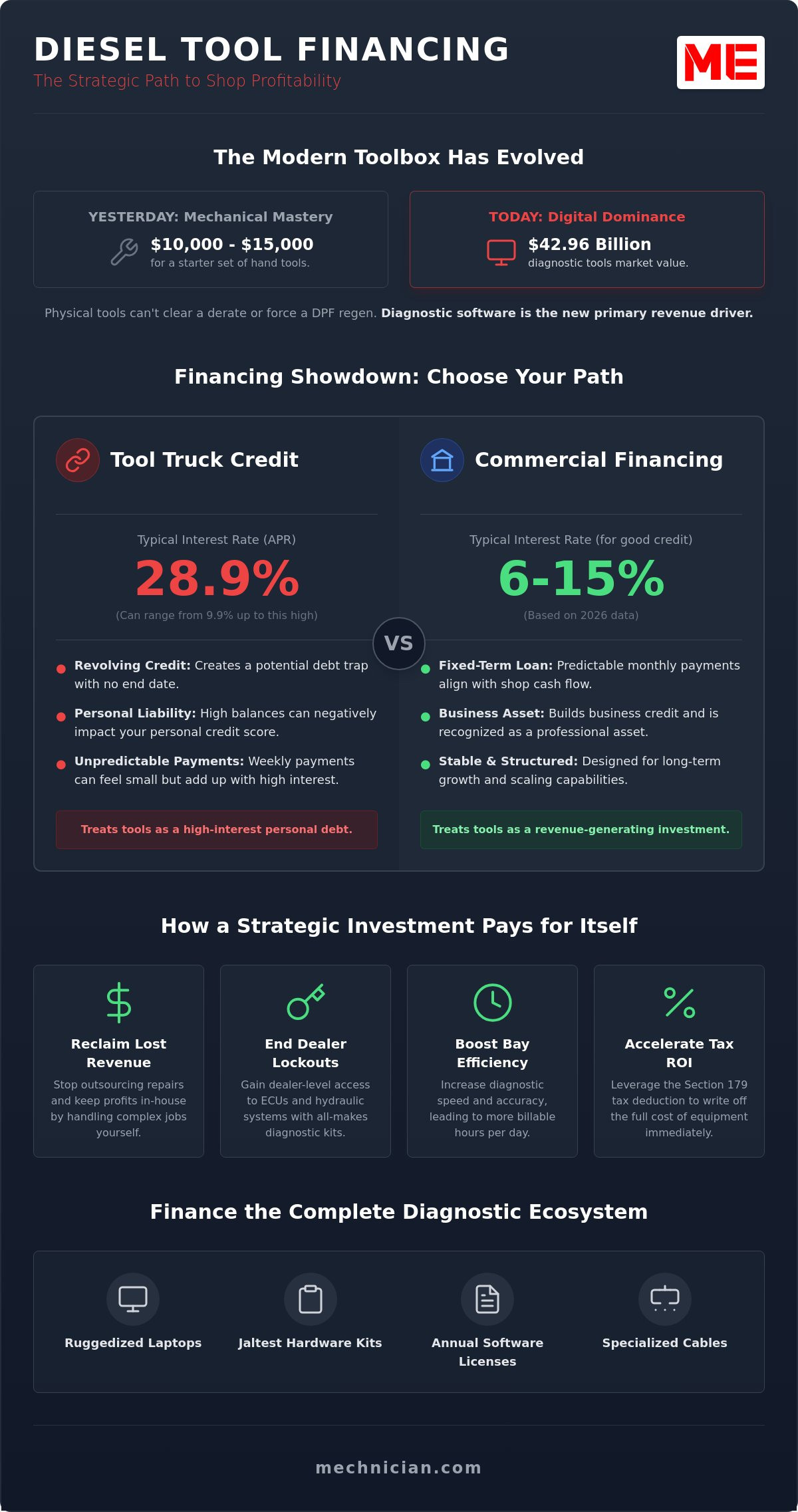
The financial logic for investing in professional diagnostics is clear when considering the costs of external service. Avoiding even a single dealer service call provides immediate relief to your maintenance budget. By bringing these capabilities in-house, your shop gains the autonomy to perform resets and calibrations that previously required a factory technician. Mechnician supports this transition with flexible financing options for the Jaltest MHE Kit and dedicated Jaltest technical support to assist with complex troubleshooting for doosan forklift fault codes and other system errors. This partnership ensures that your facility maintains the highest levels of safety and productivity.
Securing Operational Stability through Precision Diagnostics
Mastering doosan forklift fault codes is the foundation of a resilient warehouse operation. While the manual pedal dance serves as a reliable field triage method, the increasing complexity of 2026 emissions standards and electronic control units demands a more granular approach. Moving beyond simple code retrieval to perform essential calibrations and parameter resets ensures that your repairs are permanent rather than temporary fixes. This transition from reactive troubleshooting to proactive fleet management is what separates efficient shops from those constantly battling unexpected downtime.
Taking control of your maintenance schedule reduces reliance on external service providers and significantly lowers operational costs. As an authorized Jaltest dealer, we provide the specific hardware and expertise needed to integrate professional diagnostics into your daily workflow. We offer ruggedized diagnostic laptop bundles and expert remote technical support to ensure your team has the resources required for any technical challenge. It's time to move toward a more predictable maintenance model. Empower your shop with the Jaltest MHE Diagnostic Kit and secure the long-term stability of your material handling operations. With the right tools in hand, your fleet's continuous performance becomes a calculated certainty.
Frequently Asked Questions
How do I clear the fault codes on my Doosan forklift without a scanner?
You can clear non-critical codes by disconnecting the battery for several minutes or by completing a specific number of clean start-and-run cycles without the fault reoccurring. However, this won't fix the underlying issue. If the SECM detects the same out-of-range value, the light will return immediately. For permanent resolution and to ensure safety compliance, a digital reset via a diagnostic tool is the standard professional approach.
Can I use an OBD-II car scanner on a Doosan forklift?
No, standard OBD-II car scanners aren't compatible with Doosan forklifts because they use different communication protocols and physical connectors. While cars use OBD-II, industrial equipment relies on CAN bus J1939 or proprietary manufacturer protocols. You'll need an MHE-specific tool and the correct 6-pin or 9-pin Deutsch cable to establish a stable connection with the Vehicle Control Unit.
What does a solid MIL light mean if the forklift still runs?
A solid Malfunction Indicator Lamp (MIL) usually indicates that a non-critical fault is active or that a previous fault has been stored in the system history. Even if the machine appears to run normally, it might be operating with reduced efficiency or bypass certain safety checks. Ignoring a solid light can lead to more severe mechanical failures or unexpected shutdowns during critical warehouse operations.
How many times do I need to pump the pedal to see the codes?
You must depress and release the accelerator pedal exactly three times within a five-second window after turning the key to the "ON" position. This specific timing triggers the SECM to enter diagnostic mode. If you don't complete the pumps within this timeframe, the system won't initiate the flash sequence. Consistency is key to successfully retrieving doosan forklift fault codes manually.
Why does my Doosan forklift lose power when the service light comes on?
This loss of power is known as "limp mode" or a "staged de-rate," which is a protective measure programmed into the VCU. When a critical fault is detected, the system restricts engine RPM or travel speed to prevent catastrophic damage. This allows the operator to move the machine to a service area without risking total engine or transmission failure under heavy load.
Is there a difference between Daewoo and Doosan fault codes?
Many older Daewoo models share the same fundamental engine architecture and fault logic as early Doosan units. However, as Doosan transitioned to modern Tier 4 and Tier 5 engines, the electronics became significantly more complex. While basic flash codes might overlap, modern Doosan units require updated diagnostic software to access the proprietary data layers that weren't present in legacy Daewoo machines.
What is the most common cause of Code 22 on a Doosan LPG unit?
Code 22 on a Doosan LPG unit most commonly indicates a low oil pressure signal or a failure in the oil pressure sensor circuit. This is a critical fault that the SECM monitors to protect the internal engine components. You should immediately check the oil levels and the integrity of the sensor's wiring harness before attempting to restart the engine or clear the code.
How do I update the software on my Jaltest MHE diagnostic tool?
You can update your Jaltest MHE diagnostic tool by launching the Jaltest Software Manager on your ruggedized laptop while connected to the internet. The software receives major updates three times a year, which include new models and expanded system coverage. Regular updates are essential to ensure you have the latest troubleshooting guides and bi-directional capabilities for the newest forklift models entering the market.
Leave a comment