


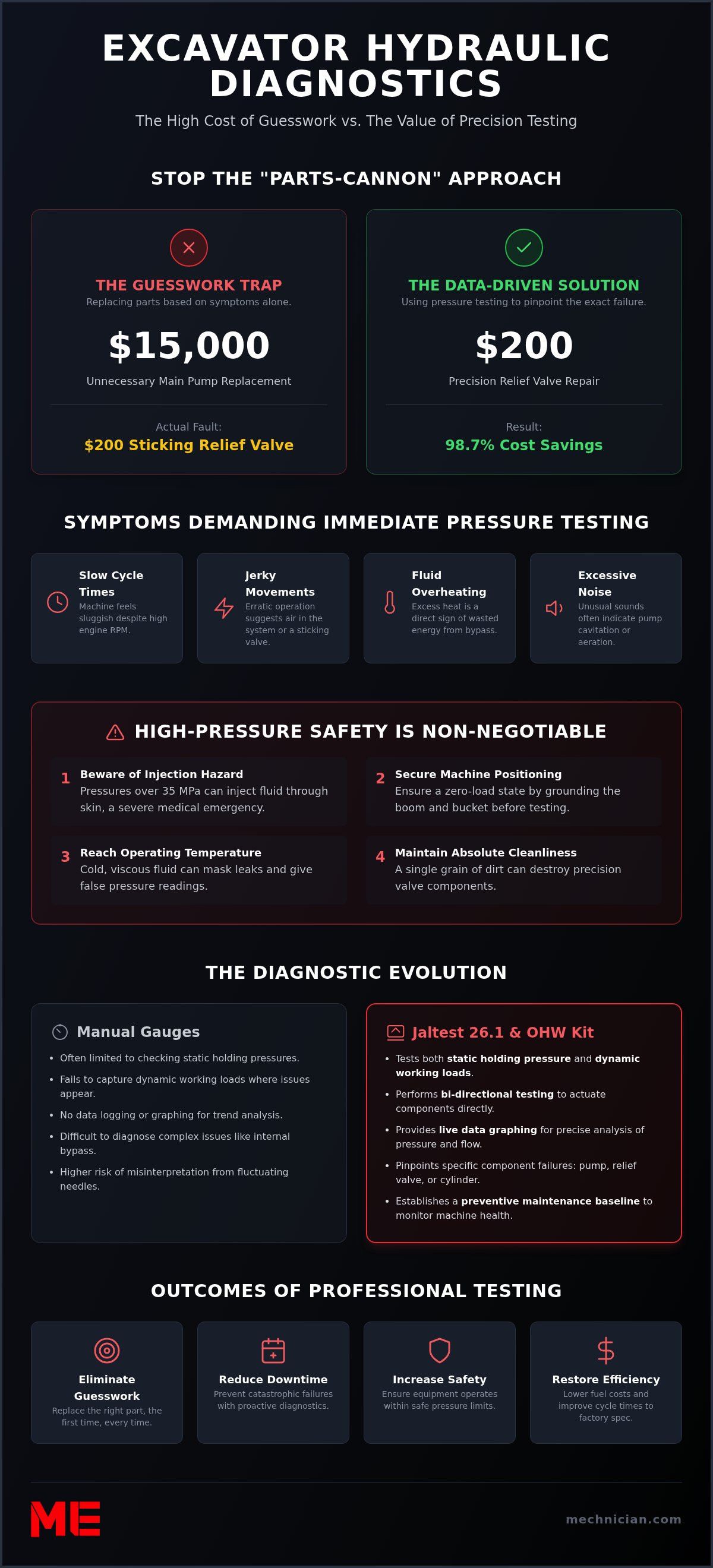
Replacing a $15,000 main pump when the actual culprit is a sticking $200 relief valve isn't just a mistake. It's a failure of diagnostic discipline that your operation cannot afford, especially with hydraulic fluid prices seeing sharp increases in 2026. Professional excavator hydraulic pressure testing is the only reliable way to move past guesswork and stop the costly "parts-cannon" approach to repairs.
You've likely felt the frustration of unplanned downtime while a machine's breakout force slowly fades, leaving you to wonder if the issue lies in the pump, the cylinder, or a control valve. This guide will help you master the technical process of diagnosing these systems using both manual gauges and the latest digital methods found in the Jaltest 26.1 software. We'll explore how to pinpoint failing components with precision, establish a preventive maintenance baseline, and utilize the Jaltest OHW Kit to restore your equipment to its peak operational safety and efficiency.
Key Takeaways
- Learn the critical safety protocols and machine positioning required to meet 2026 international standards for high-pressure system diagnostics.
- Master a systematic approach to excavator hydraulic pressure testing that distinguishes between static holding pressure and dynamic working loads.
- Identify exactly which component is failing, whether it's the main pump, a relief valve, or an internal cylinder bypass, to eliminate unnecessary parts replacement.
- Discover how to use the Jaltest OHW Kit to perform bi-directional testing and live data graphing for a more accurate diagnosis than manual gauges can provide.
- Establish a preventive maintenance baseline to monitor machine health and significantly reduce unplanned downtime throughout the equipment's lifecycle.
Understanding Excavator Hydraulic Systems & Why Pressure Testing Matters
The hydraulic system of a modern excavator is a complex network where precision is as important as power. At the center of this system sits the main hydraulic pump. Its primary role is to convert the mechanical energy of the engine into fluid power. This power eventually becomes the breakout force required to move tons of earth. When this conversion is inefficient, the entire machine suffers. Performing regular excavator hydraulic pressure testing is not merely a repair task; it's a strategic maintenance decision that protects your most valuable assets.
Many operators confuse static pressure with dynamic pressure. Static pressure refers to the system's ability to hold a load or reach a relief setting while the actuators are at rest. Dynamic pressure, however, involves the system's behavior while fluid is flowing and work is being performed. A machine might show perfect static pressure at a test port, yet fail to provide the necessary speed or force during a dig cycle. This discrepancy often points to internal wear that a simple visual inspection will never reveal.
Visual checks are limited to identifying external leaks or frayed hoses. They cannot detect internal valve leakage, spool wear, or pump cavitation. Cavitation occurs when air bubbles form and collapse within the fluid, physically eroding metal components from the inside out. By the time you see external symptoms, the internal damage is often irreversible. With fuel costs representing 30% to 40% of an excavator's operating expenses in 2026, even a 10% drop in hydraulic efficiency leads to significant financial loss through wasted energy and increased cycle times.
Primary Hydraulic Components Under Test
- Main Pump: We evaluate volumetric efficiency to ensure the pump delivers the correct flow at the required pressure. A pump can often maintain pressure while losing the flow rate necessary for speed.
- Main Relief Valve: This component acts as the gatekeeper. If it opens too early or fails to reseal, the system cannot reach the pressures needed for heavy lifting.
- Control Valves: We monitor these for internal bypass. Worn spools allow oil to leak back to the tank, causing "drift" in the boom or bucket.
Symptoms That Demand Immediate Pressure Testing
You shouldn't wait for a total system failure to begin diagnostics. Slow cycle times are the first warning sign. If the machine feels sluggish despite high engine RPM, the hydraulic system is likely struggling to maintain flow under load. Jerky or erratic movements often indicate air in the system or a sticking valve spool. Finally, pay attention to excessive noise or fluid overheating. Heat is the byproduct of wasted energy; when oil bypasses a seal or valve, it generates friction that can quickly degrade your expensive hydraulic fluid.
Preparation and Safety Protocols for High-Pressure Testing
Safety is the non-negotiable foundation of any diagnostic procedure. When you perform excavator hydraulic pressure testing, you're working with pressures that often exceed 35 MPa. At these levels, a pinhole leak acts like a surgical needle. It can inject hydraulic fluid directly through skin and into the bloodstream. This is a medical emergency that requires immediate specialized treatment. Standard leather or nitrile gloves provide zero protection against fluid injection. Modern safety standards, such as IEC 63458-3:2026, emphasize the need for comprehensive safety requirements when operating high-pressure machinery. You need specialized gear and a mindset focused on risk mitigation.
Proper machine positioning is equally critical during excavator hydraulic pressure testing. Secure the boom and bucket on the ground or in a dedicated service rack to ensure a zero-load state. Testing a system under tension is dangerous. It also produces skewed results. You must also reach the correct operating temperature. Testing cold hydraulic oil is a common mistake. Cold fluid has higher viscosity. This masks internal leaks or shows artificially high pressure readings. Always cycle the machine until the fluid reaches its standard operating temperature. This ensures the data reflects real-world working conditions.
Cleanliness is paramount in hydraulic maintenance. A single grain of sand introduced through a test port can destroy a precision-machined valve spool. Use lint-free towels. Clean every fitting thoroughly before removing a cap. Once the test is complete, replace the dust caps immediately to prevent long-term contamination.
The 'Zero Pressure' Verification
Before opening any hydraulic line, you must verify that the system is truly depressurized. This involves more than just turning off the engine. Many modern excavators use accumulators that store energy for emergency pilot control. Cycle the joysticks in all directions with the engine off to bleed this stored pressure. It's also vital to check the hydraulic lockout lever. You can use a professional vehicle diagnostic tool to monitor the live system pressure. This confirms the discharge is complete before you physically break a seal.
Essential Testing Equipment Checklist
Precision requires the right tools. Manual gauges are reliable for basic checks. However, they often lack the resolution needed for complex faults. A professional setup should include:
- Manual Gauge Kit: Use calibrated gauges with a 0-10,000 PSI range.
- Jaltest OHW Kit: This allows for electronic sensor monitoring. You can compare physical pressure with ECU-reported data.
- Port Plugs and Towels: These maintain system integrity during the procedure.
For those managing a fleet, investing in a Jaltest OHW Kit ensures your technicians have the digital precision required to match physical measurements with internal software logic.
Step-by-Step Excavator Hydraulic Pressure Testing Procedure
Executing a systematic excavator hydraulic pressure testing procedure requires a blend of traditional mechanical skills and modern digital diagnostics. You should begin by locating the primary test ports. These are typically situated at the main pump discharge or the main control valve bank. Every manufacturer provides specific port locations in their service manual. Identifying these correctly prevents the common error of testing the wrong circuit. Once the ports are identified and cleaned, you can install your manual gauges. At the same time, connect the Jaltest OHW interface to the machine's diagnostic port to begin the digital data stream.
Modern equipment requires the machine to be in a specific "Test Mode" or held at a steady high idle to ensure consistent flow. You should first record baseline pressures at neutral. This confirms the system is unloading correctly. Next, move to full stall readings by bottoming out a function until it hits the relief setting. The professional advantage comes from comparing your manual gauge readings against the digital sensor data displayed in the Jaltest software. If the manual gauge shows 30 MPa but the ECU reports 25 MPa, you've identified a faulty pressure sensor rather than a mechanical pump failure. This cross-referencing eliminates the "parts-cannon" approach to repairs.
Testing the Main Relief Valve (MRV)
To test the MRV, you must stall a high-pressure function, such as curling the bucket completely. This forces the fluid through the relief valve. If the pressure reading is below the OEM specification, the valve may require adjustment or replacement. Adjusting the MRV requires extreme precision; even a quarter-turn can lead to catastrophic over-pressurization and component failure. Always verify the new setting with multiple stall tests to ensure the valve reseats properly every time.
Pilot Pressure Testing
Low pilot pressure is the most frequent cause of stiff or unresponsive controls. The pilot pump often operates on a separate, lower-pressure circuit. You should test this circuit independently of the main hydraulic system. While manual gauges show the pressure, the Jaltest OHW Kit allows you to monitor the solenoid activation signals for the pilot valves. This helps you determine if a lack of response is due to a mechanical pressure drop or an electronic signal failure from the operator's joystick. This dual-layered approach ensures no fault remains hidden within the machine's complex logic.
Interpreting Results: Common Faults and Data Analysis
Data without interpretation is just noise. Once you've completed the physical steps of excavator hydraulic pressure testing, you must analyze how those numbers correlate with the machine's actual performance. A common finding is low pressure at stall. This usually indicates a main relief valve that's failing to hold or a pump that's internally worn. If the pressure doesn't rise after a minor adjustment, the pump's volumetric efficiency has likely degraded beyond acceptable limits. The pump can no longer maintain the seal required to build high pressure against a heavy load.
Good pressure readings don't always mean a healthy system. If a machine reaches its relief setting but moves slowly, you're looking at a flow issue. Pressure is the resistance to flow; it represents the machine's strength. Flow represents its speed. When a pump is worn, it might still reach 35 MPa against a dead head, but it can't deliver the gallons per minute required for fast cycle times. Pressure fluctuations or "chatter" on a manual gauge often signal air ingestion or failing pump pistons that are struggling to maintain a constant output. Digital diagnostics through Jaltest can further identify if these issues are tied to specific solenoid or sensor-side failures, providing a clear path to the correct repair.
The Difference Between Pressure and Flow
Understanding the distinction between these two variables is vital for accurate diagnostics. A machine can have the strength to lift a full bucket but take twice as long as it should. This indicates that while the relief valves are doing their job, the pump or the flow control solenoids are not. The Jaltest OHW Kit helps visualize this by showing the ECU's expected flow versus the actual sensor feedback. This digital oversight prevents you from replacing a perfectly good pump when the issue is actually an electronic current problem at the pump regulator.
Cylinder Bypass Testing
Internal leakage within a cylinder is a silent thief of machine power. You can detect this without disassembly by using the "heat gun" method. Stall the function for thirty seconds and monitor the temperature of the cylinder barrel. If the temperature spikes near the piston head, oil is bypassing the seals and generating friction heat. This isolation testing confirms which specific circuit is losing energy and provides the data you need for a professional service report. To upgrade your diagnostic capabilities and eliminate the uncertainty of manual testing, explore our Jaltest OHW diagnostic kits today.
The Jaltest Advantage: Modernizing Hydraulic Troubleshooting
The transition from manual gauges to digital diagnostics represents a fundamental shift from guessing to knowing. While manual excavator hydraulic pressure testing remains a core skill for any technician, it has physical limitations. A traditional needle gauge cannot capture high-frequency pressure spikes that occur in milliseconds. The Jaltest 26.1 software, released in March 2026, solves this through high-resolution live data graphing. It allows you to visualize the heartbeat of the hydraulic system in real time, identifying transient faults that would otherwise remain invisible to the naked eye.
Bi-directional testing is another critical feature that sets modern diagnostics apart. It enables you to force solenoids and valves to open or close directly from your ruggedized diagnostic laptop. This is the fastest way to isolate whether a failure is mechanical or electronic. If a valve fails to respond to a software command, you can immediately check the integrated wiring diagrams within the interface to trace the fault. This level of technical data integration means you don't have to hunt for OEM pressure specifications; they're already embedded within the Jaltest environment for thousands of models.
Professional reporting completes the diagnostic cycle. You can generate a comprehensive PDF report that documents the machine's state before and after the repair. This provides tangible proof of success for fleet managers or customers, building trust through transparency and engineering precision. It transforms a simple repair into a documented service history that adds value to the machine's lifecycle.
Reducing 'Dealer Dependency'
Independent shops often face barriers when it comes to hydraulic calibrations. Jaltest OHW Kits remove these hurdles by providing the same calibration capabilities as dealer-only software. Whether you're adjusting a pump regulator or recalibrating a new control valve, the software guides you through the process with step-by-step logic. For complex multi-pump systems, Mechnician's technical support offers a secondary layer of expertise. This partnership ensures your team can handle even the most challenging troubleshooting scenarios without sending the machine back to the dealer.
Financing Your Diagnostic Future
The return on investment for a Jaltest Kit is often realized within the first few major repairs. By eliminating "parts-guessing" errors, you save thousands in unnecessary component costs and prevent the waste of expensive hydraulic fluid. Mechnician offers flexible financing options to help fleet maintenance teams integrate these tools without a massive upfront capital outlay. It's a strategic decision that turns technical supervision into a long-term stability asset for your organization. Explore Jaltest OHW Kits for your excavator fleet and take full control of your diagnostic future.
Securing Long-Term Operational Stability
Mastering excavator hydraulic pressure testing is more than a technical skill; it's a commitment to operational stability. By moving away from the "parts-cannon" approach and adopting a hybrid diagnostic method, you ensure every repair is backed by objective data. You've seen how digital graphing and bi-directional tests identify faults that manual gauges miss. This precision reduces unplanned downtime and maximizes the lifespan of your expensive hydraulic components.
As an authorized dealer for Cojali Jaltest, Mechnician provides the tools and expertise needed to bring your diagnostics into the modern age. Our kits include ruggedized laptops built for the toughest jobsites and expert remote technical support to help you through complex multi-pump calibrations. Stop guessing and start diagnosing with the Jaltest OHW Kit. Take control of your fleet's maintenance today and build a foundation for long-term machine health.
Frequently Asked Questions
What is the standard hydraulic pressure for a large excavator?
Standard working pressures for large excavators typically range between 30 MPa and 35 MPa (4,350 to 5,000 PSI) for the main hydraulic circuits. The pilot pressure, which controls the valve spools, is significantly lower and usually stays between 3.5 and 5 MPa. You should always consult the specific machine's service manual, as these values vary based on the manufacturer and the weight class of the equipment.
Can I perform a hydraulic pressure test while the oil is cold?
You shouldn't perform excavator hydraulic pressure testing with cold oil. Cold fluid has a higher viscosity that can mask internal leaks or create artificially high pressure readings that don't reflect the machine's actual performance. It's best to cycle the machine until the fluid reaches its standard operating temperature, typically between 50°C and 80°C, before recording any data.
How do I know if my hydraulic pump is failing or if it's just a relief valve?
A stall test combined with a relief valve adjustment is the most effective way to differentiate these faults. If you attempt to adjust the relief valve and the pressure remains unchanged or fails to reach the specification, the pump is likely too worn to produce the required flow. If the pressure rises with the adjustment but fails to hold steady, the relief valve itself is the probable culprit.
Do I need a different diagnostic kit for Cat, Komatsu, and John Deere excavators?
You don't need separate kits for different brands. The Jaltest OHW Kit is a multi-brand solution that covers all major heavy equipment manufacturers within a single interface. This allows independent shops to maintain a diverse fleet of Cat, Komatsu, and John Deere machines using one diagnostic platform, eliminating the need for multiple expensive dealer tools.
What happens if the hydraulic relief pressure is set too high?
Setting the relief pressure above the manufacturer's specification can lead to catastrophic component failure and dangerous high-pressure bursts. It places excessive stress on hoses, seals, and pumps, which significantly shortens their service life. Over-pressurization also generates extreme heat, causing the hydraulic fluid to degrade rapidly and reducing the machine's overall efficiency.
Is it possible to test hydraulic pressure without a manual gauge?
It's possible to monitor pressure through the machine's electronic control unit using the Jaltest software. This provides a fast way to see what the machine's internal sensors are reporting. However, a hybrid approach is always recommended; comparing digital data against a manual gauge helps you identify if a sensor itself has failed, ensuring the most accurate diagnosis possible.
How often should I perform a 'baseline' hydraulic pressure test on my machines?
You should establish a baseline for excavator hydraulic pressure testing every 1,000 to 2,000 operating hours or at least once a year. Regular testing allows you to track the gradual decline in pump efficiency and identify wear before it leads to unplanned downtime. This data serves as a critical reference point for troubleshooting when performance issues eventually arise.
Can Jaltest software help with hydraulic calibrations after a pump replacement?
Jaltest software is essential for performing hydraulic calibrations after a pump or valve replacement. Most modern excavators require the ECU to be updated with the new component's specific performance characteristics to ensure smooth and synchronized operation. The Jaltest OHW Kit provides the bi-directional commands necessary to complete these calibrations without the need for a dealer technician.




Dejar un comentario